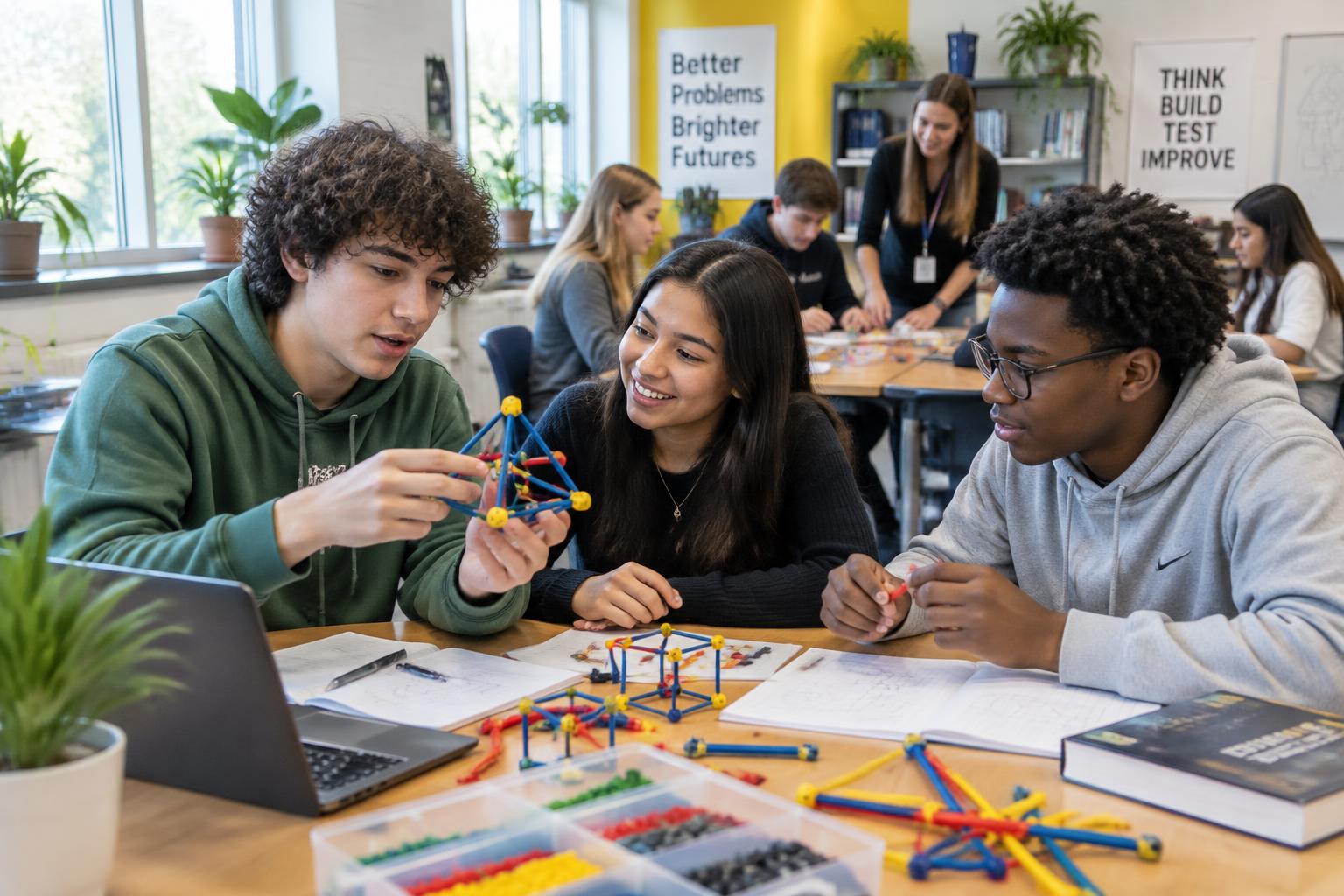
Students collaborating on a hands-on geometry project in a bright classroom

EMPOWER SOLUTION CENTER / 01

CBE Made
Easy

Making Competency-Based Education practical in today's classroom.

Meet students where they are. Close gaps. Build mastery. A practical pathway with Pro Fish In Sea.

Explore the six steps
AI-generated classroom illustration
THE IMPLEMENTATION GAP

The vision has always been right.
The workload has been the problem.

THE PROMISE & THE CHALLENGE

Compelling in principle.
Demanding in practice.

If you believe in Competency-Based Education, then you already understand the promise.

CBE provides the structure needed to meet students at the point of their need, ensure they develop mastery before moving on, and prevent learning gaps from continuing to grow over time.

Not because the ideas are complicated, but because doing it well has traditionally required an enormous amount of time and effort.

Why has CBE been so hard to implement?

01

Building high-quality proficiency scales takes time.

Creating a Guaranteed and Viable set of scales across content areas requires careful attention to rigor, learning progressions, prerequisite skills, and the essential knowledge students truly need. Doing this work well can take years.

02

Creating a coherent Scope & Sequence is another major undertaking.

Once the scales are developed, they must be organized into a transparent and logical progression that identifies what should come first, what can be learned together, what should spiral, and how learning should progress toward mastery.

03

Then comes the “How.”

Once you have defined what students need to learn and when they should learn it, you still need the activities, assessments, projects, lesson plans, resources, and learning experiences that will help students get there. Creating and aligning all of those resources can be daunting.

04

Differentiation is essential, but difficult to manage.

If we truly intend to meet students at the point of their need, students cannot all be doing the same work simply because they are sitting in the same classroom. Teachers must be able to identify different learning needs, organize students accordingly, and provide targeted instruction and resources.

05

CBE requires more evidence of learning.

At its core, CBE continually asks a simple but demanding question:

What does this learner know right now?

Answering that question accurately requires evidence. More evidence means better instructional decisions, but it can also mean a greater scoring and feedback burden for teachers.

THE CAPACITY GAP IS CHANGING

From idealistic
to realistic.

Too often, CBE has felt idealistic, but not realistic because the workload required to implement it well exceeded the time and staffing available to most schools.

AI and modern technology can help fill the capacity gap and make the idealistic finally realistic.

BUILDING THE FOUNDATION

Years hours

SUPPORTING DAILY LEARNING

Hours minutes

Work that once took years can take hours. Work that once took hours can take minutes.

THE EDUCATOR STAYS AT THE CENTER

You direct the learning.
Technology supports
the work.

Technology does not replace the educator. It empowers the educator.

Think of yourself as the conductor of an orchestra. You do not need to play every instrument yourself, but you do need to understand music, recognize what good music sounds like, and guide the performance when something is off.

Technology can help create scales, learning plans, resources, assessments, activities, and feedback, but you remain the director of the learning experience.

  • You understand pedagogy.
  • You understand your students.
  • You know what engaging learning looks like.
  • You know when something is not quite right.

You provide the direction. Technology helps do the work. You review the result, refine it when needed, and continue guiding the process until it meets the needs of your learners.

THE PRO FISH IN SEA PATHWAY

Set up with confidence.
Teach in a connected cycle.

The entire process has been refined into six steps. Build your foundation, create your classes, then use evidence to guide the next learning experience.

BUILD THE FOUNDATION / STEPS 1–4
  1. 01

    Define What Needs to Be Learned

    Establish the learning expectations students will work toward mastering.

  2. 02

    Organize the Learning Path

    Organize your scales into a transparent Scope & Sequence that reflects prerequisite learning, progression, pacing, and relationships between goals.

  3. 03

    Create Scale-Based Learning Resources

    Develop the activities, assessments, projects, lesson plans, resources, and games students will use to learn, practice, and demonstrate mastery.

  4. 04

    Create & Manage Classes

    Identify the proficiency scales students are expected to master and the students who will be working toward them.

A guided start with the Setup Wizard.

Walk through steps 1–3 together to build the foundation for your classroom.

ONGOING CLASSROOM CYCLE

Teach. Gather evidence. Adjust. Repeat.

  1. 05

    Use Student Work Stations

    The system overlays your Scope & Sequence with current student evidence to identify the differentiated learning needs within your classroom. Teachers can then select the scale-aligned resources that best address the needs of each student or group.

  2. 06

    Score the Work and Update

    Students complete their work and generate new evidence of learning. Technology can assist with scoring and feedback. Those results update each student's position within the learning plan, allowing the teacher to immediately identify what comes next.

Repeat steps 5 & 6 until students have mastered the scales established for the class.

THE PROOF IS IN THE EXPERIENCE

See what a transformed
classroom could look like.

Start with the free or paid version of Pro Fish In Sea. The six steps and their tools are right on your home page. Select the Wizard to get started.

Try Pro Fish In Sea ← Explore Our Solutions