01
Creative & Critical Thinkers
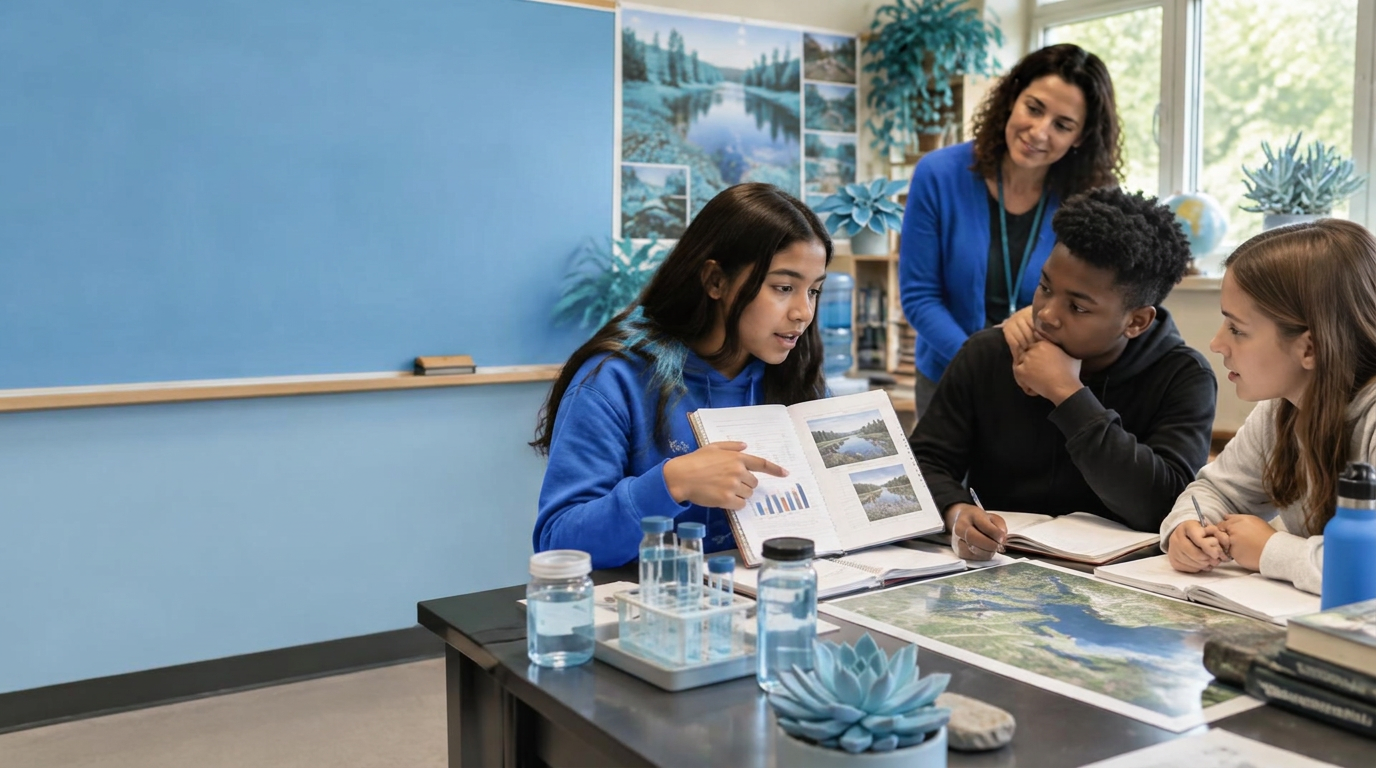
Ask meaningful questions. Evaluate evidence. Imagine and test better solutions.
PORTRAIT OF A GRADUATE
Help students become the thinkers, communicators, learners, and citizens your community envisions.
From vision to daily learning A practical pathway with Pro Fish In SeaNot just “What should a graduate know?”
“Who are we helping them become?”
THE PURPOSE
A Portrait of a Graduate describes the competencies a community wants every student to develop, not only for graduation, but for work, relationships, civic life, and continued learning. Its value grows when those aspirations become clear expectations students can practice and teachers can support.
Ask meaningful questions. Evaluate evidence. Imagine and test better solutions.
Express ideas clearly, listen to understand, and communicate for a purpose.
Use feedback, reflect on progress, and keep learning through challenges.
Consider other perspectives, act responsibly, and contribute to a community.
Illustrative classroom look-fors, not a substitute for the complete proficiency scales.
Creative & Critical ThinkersEvaluate evidence and justify a conclusion.
Effective CommunicatorsAdapt an explanation to an audience and respond to questions.
Resilient, Lifelong LearnersReflect on a strategy and make an improvement plan.
Engaged CitizensCompare perspectives and propose a responsible action.
THE IMPLEMENTATION GAP
A competency such as Critical Thinking may express exactly what a school wants for its graduates. But until that vision is translated into observable skills, clear expectations, and opportunities to practice, it can remain little more than an aspiration.
“Be a critical thinker.”
“Evaluate the evidence.
Compare perspectives.
Defend your conclusion.”
THE PRO FISH IN SEA PATHWAY
A connected workflow turns broad competencies into concrete next steps, meaningful practice, and conversations about growth.
Grade-banded proficiency scales describe what students are working toward. Foundational skills at 2.0 support the target at 3.0; 4.0 describes advanced application.
Student-friendly language and a next-score prompt help learners answer: What do I need to do next?
Academic learning and Portrait of a Graduate competencies do not need to compete for instructional time.
Pro Fish In Sea helps teachers identify natural Blend Opportunities where an academic task can also provide an authentic opportunity to develop a Portrait of a Graduate competency.
The academic scale remains the primary learning target. The POG competency adds another dimension to how students engage in, manage, apply, or communicate that learning.
Describes how a plot unfolds and how characters respond or change, and analyzes how a key individual, event, or idea is introduced, illustrated, and elaborated.
Organizes tasks, sets priorities, and uses resources such as texts, digital media, and teacher support to complete work on time.
Character Change Analysis
At the beginning of The Most Dangerous Game, Sanger Rainsford has strong opinions about hunters and the animals they hunt.
Then he becomes the hunted.
Your task is to determine: How do the events on Ship-Trap Island affect Rainsford’s thinking, behavior, and perspective?
As you read, collect evidence that shows how Rainsford responds to the increasingly dangerous events of the story.
Read the opening portion of the story through Rainsford’s arrival at General Zaroff’s home. Identify evidence that reveals:
Record at least two pieces of textual evidence that establish what Rainsford is like at the beginning of the story.
Continue reading as Rainsford becomes General Zaroff’s prey. Identify at least three important events that influence Rainsford. For each event, record:
Pay particular attention to moments when Rainsford experiences the fear, uncertainty, and vulnerability of being hunted.
Complete this final response: How does Rainsford develop over the course of The Most Dangerous Game, and which events contribute most to that development?
Use evidence from the beginning, middle, and end of the story. Your response should:
You have three class periods to complete the investigation. Before beginning, create a simple plan for your work. Decide:
Available resources include the story text, audio version, vocabulary support, Character Change Evidence Tracker, class notes, and teacher support. At the end of each class period, check your progress and adjust your plan if needed.
One meaningful learning experience can produce evidence of both academic mastery and the competencies students need to become increasingly independent learners.
The student dashboard brings the four pillars, target statuses, and goals into one view. Students can see where they are progressing and choose a specific skill to work on.
The portrait becomes a learning journey students can name and navigate, rather than a list of qualities adults describe for them.
Students select a goal score and describe what they will do and how they will recognize success, or create their own activity with the AI coach.
Teacher approval, artifacts, reflection, and scoring connect intention to evidence. The teacher stays in the loop; creating a goal is not the same as demonstrating proficiency.
The teacher view summarizes target progress and highlights goals needing review or scoring. Status filters and student-level views help teachers focus their attention.
Use the information to plan feedback and support, not to reduce a learner’s identity to a number.
MAKE IT THEIRS
When students design activities themselves, portrait skills stop being school language and start being life skills they can name, practice, and prove anywhere.
Practice a skill through something they love, from hobbies to passion projects they choose themselves.
Design a way to show growth that fits how they learn best, then gather evidence of their progress.
Bring goals home by teaching a sibling, joining a family project, or helping with real responsibilities.
Make a difference where it matters, from volunteering to a project their neighborhood can see.
Teachers approve and score the evidence, so student-designed activities stay connected to the goals their community values.
A SHARED LANGUAGE FOR GROWTH
Clear expectations, visible progress, and a voice in planning their own growth.
A practical way to connect competency goals to instruction, evidence, feedback, and next steps.
A concrete implementation pathway for the graduate vision, with classroom-level progress to inform conversations.
Specific skills and goals that make conversations about learning more meaningful than broad labels.
The platform supports the work; educators and students bring the vision to life. Screenshots show illustrative data, not measured impact or guaranteed outcomes.
FROM ASPIRATION TO ACTION
Give it a place in every student’s learning journey.
Explore Pro Fish In Sea Discover the whole platform →